Dental Amalgam vs Composite Fillings: Which Is Better for Your Teeth?
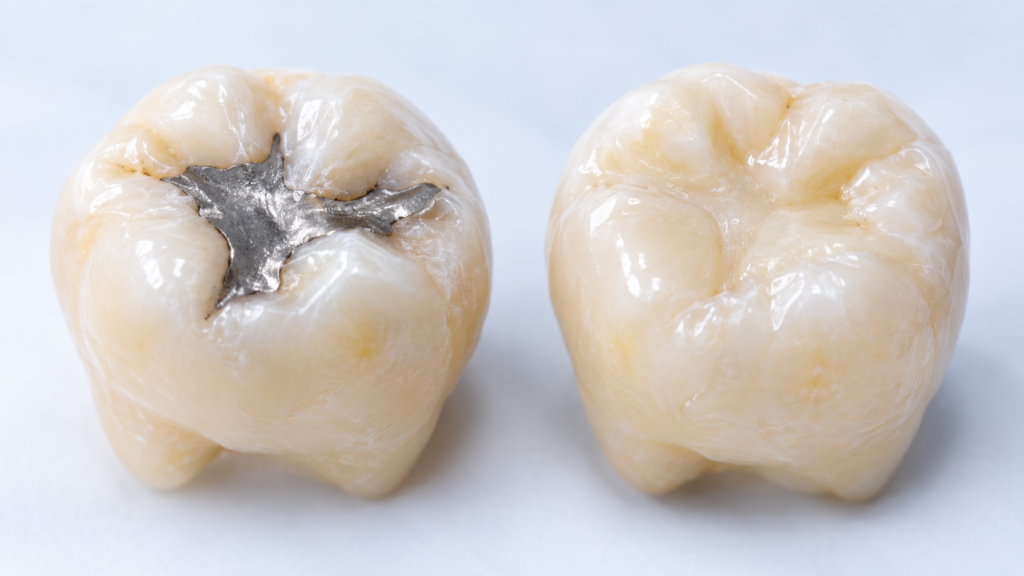
When you need a dental filling, one of the decisions you may face is whether to choose an amalgam (silver-coloured) filling or a composite (tooth-coloured) filling. Both materials can restore teeth affected by decay or damage, but they differ in appearance, composition, placement and cost.
So, when comparing dental amalgam vs composite fillings, which is better for your teeth?
There isn’t one option that’s best for everyone. Composite fillings are often preferred for their natural appearance and ability to bond to tooth structure. Amalgam fillings have a long history of use and can provide durable restorations in appropriate situations. However, the most suitable choice depends on the location of the tooth, the size of the cavity, your oral health and individual clinical needs.
This guide explains the key differences to help you understand your options before discussing treatment with your dentist.
What Are Dental Amalgam and Composite Fillings?
Dental fillings are used to repair teeth affected by decay, fractures or other damage. Once the dentist has assessed the tooth and prepared it for restoration, a suitable material is used to rebuild the affected area and help restore its function.
Two established filling materials are dental amalgam and composite resin.
What Is an Amalgam Filling?
Dental amalgam is a silver-coloured restorative material made from a mixture of metals, including silver, tin and copper, combined with mercury.
Amalgam has been used in dentistry for many years, particularly for restoring back teeth that experience considerable chewing pressure. It has a long clinical track record and is generally less sensitive to moisture during placement than composite.
However, its metallic appearance makes it more noticeable than a tooth-coloured filling. Its use is also subject to specific UK regulations.
What Is a Composite Filling?
A composite filling is a tooth-coloured restoration made from a resin-based material combined with fine filler particles, typically containing glass or ceramic.
The material is selected to resemble the natural colour of the surrounding tooth. It is bonded to the tooth using an adhesive technique and is usually hardened with a dental curing light.
Composite fillings can be used to restore both front and back teeth, depending on the clinical situation.
Dental Amalgam vs Composite Fillings: Key Differences
Although amalgam and composite fillings are designed to restore damaged teeth, their properties and placement techniques differ.
The following table highlights the main differences between silver-coloured amalgam fillings and tooth-coloured composite fillings.
| Feature | Amalgam fillings | Composite fillings |
| Appearance | Silver-grey metallic colour | Tooth-coloured and more discreet |
| Composition | Metal alloy containing mercury | Resin-based material with filler particles |
| Durability | Long clinical track record, particularly in back teeth | Can perform well over many years when appropriately selected and placed |
| Bonding | Mainly retained by the shape of the prepared cavity | Bonded to the tooth using an adhesive system |
| Tooth preparation | May require a cavity shape that provides mechanical retention | May allow more conservative preparation in suitable cases |
| Moisture control | Generally more tolerant of moisture during placement | Requires careful moisture control for reliable bonding |
| Cost | Often less expensive | Often more expensive |
| Aesthetic result | More visible, particularly when smiling or speaking | Designed to blend with natural teeth |
These differences are useful when considering treatment, but they do not mean that one material is always clinically superior.
The dentist must assess the tooth and surrounding structures before recommending an appropriate restoration.
Advantages and Disadvantages of Amalgam vs Composite Fillings
Both materials have benefits and limitations. Understanding these can help you discuss the available options with your dentist.
Advantages and Disadvantages of Amalgam Fillings
Amalgam fillings have a long history of clinical use and can be effective in appropriate restorations.
Advantages:
- Established durability: Amalgam has a long clinical track record, including in back teeth exposed to considerable chewing forces.
- Generally lower cost: Amalgam fillings are often less expensive than composite alternatives.
- Moisture tolerance: The material is generally less sensitive to moisture contamination during placement than adhesive composite restorations.
Disadvantages:
- Visible appearance: The silver-grey colour does not match the surrounding natural tooth.
- Tooth preparation: Some amalgam restorations require additional shaping of the cavity to help retain the material.
- Mercury content: Amalgam contains mercury, and its use is restricted in certain patient groups under UK regulations.
Advantages and Disadvantages of Composite Fillings
Composite fillings are widely used because of their tooth-coloured appearance and adhesive properties.
Advantages:
- Natural appearance: Composite can be shade-matched to blend with surrounding teeth.
- Adhesive bonding: The material bonds to tooth structure and may allow a more conservative preparation in suitable cases.
- Versatility: Composite can restore cavities in both front and back teeth.
- Repair potential: Some composite restorations can be repaired rather than completely replaced, depending on their condition.
Disadvantages:
- Moisture sensitivity: Reliable bonding requires careful control of saliva and moisture during treatment.
- Potential staining: Composite fillings may become discoloured over time, particularly around their margins.
- Cost and treatment time: Composite restorations can be more expensive and may take longer to place.
Neither list should be considered a substitute for an individual dental assessment.
Which Lasts Longer: Amalgam or Composite Fillings?
Durability is an important consideration when comparing amalgam and composite fillings.
Amalgam has traditionally been valued for its long-term performance, particularly in back teeth. Composite materials and placement techniques have improved considerably, and modern composite fillings can also remain functional for many years.
A 2021 Cochrane review found that composite restorations in back teeth had a higher risk of failure than amalgam in the studies included. However, the certainty of the evidence was low. A more recent Cochrane review published in 2026 noted that these findings were largely based on older studies and may not fully reflect improvements in modern composite materials and placement techniques.
A filling’s lifespan depends on several factors, including:
- The size and location of the restoration
- The amount of healthy tooth structure remaining
- Chewing forces and teeth grinding
- Oral hygiene and the risk of further tooth decay
- The quality of placement and ongoing dental care
Rather than choosing a filling based on an expected number of years alone, it is better to consider which material is most appropriate for the individual tooth.
Are Amalgam or Composite Fillings Safer?
Both amalgam and composite are established dental restorative materials, but each has specific clinical considerations.
Understanding Mercury in Amalgam Fillings
Dental amalgam contains mercury combined with other metals to form a restorative material.
The presence of mercury can understandably raise concerns. However, an existing, sound amalgam filling does not automatically pose a reason for removal. The decision to repair or replace a restoration should be based on its condition and the patient’s individual circumstances.
In the UK, restrictions introduced in July 2018 mean that dental amalgam must not be used to treat primary teeth, children under 15, or pregnant or breastfeeding patients, unless a dentist considers its use strictly necessary for specific medical needs.
There is also an ongoing policy commitment to reduce the use of dental amalgam and move towards suitable alternatives.
These restrictions do not mean that all existing amalgam fillings need to be replaced.
Are Composite Fillings Safe?
Composite fillings do not contain the mercury used in dental amalgam. They are made from resin-based materials that are widely used in modern restorative dentistry.
Like other dental materials, composites have individual considerations, including possible sensitivities or allergies to particular components.
Your dentist should consider your medical history, any known material allergies, the condition of the tooth and the suitability of the proposed restoration.
Amalgam vs Composite Fillings: Which Is More Affordable?
Cost can influence the choice between dental filling materials.
Amalgam fillings are often less expensive than composite fillings, partly because the materials and placement techniques differ. Composite restorations may require additional steps for shade selection, moisture control, bonding and finishing.
However, the final cost of a filling depends on several factors, including the size of the cavity, which tooth requires treatment and the complexity of the restoration.
At Mallards Dental Practice in Henfield, the published fee guide lists:
- Amalgam fillings: From £121
- Tooth-coloured fillings: From £154
These are starting prices, and the actual treatment cost will depend on your individual needs. You can find further information on the Mallards Dental Practice fee guide.
In England, NHS dental treatment follows a different charging structure. Tooth-coloured fillings may be available through the NHS when they are clinically appropriate; they are not exclusively a private treatment option.
Your dentist can explain the available treatment options and any associated costs before you decide how to proceed.
Which Filling Is Better for Front Teeth and Back Teeth?
The position of the affected tooth is an important consideration when choosing between dental amalgam and composite fillings.
Fillings for Front Teeth
Front teeth are highly visible when you smile, speak and eat. For this reason, appearance is often a major consideration.
Composite fillings are commonly used for front teeth because the material can be matched to the surrounding natural tooth colour.
Composite can also be useful for restoring small chips and other suitable areas of tooth damage while maintaining a natural appearance.
The choice of restoration will still depend on the extent and type of damage.
Fillings for Back Teeth and Molars
Back teeth experience significant pressure during chewing, so the strength of the remaining tooth and the extent of the cavity are particularly important.
Amalgam has an established record of use in molars and other back teeth. However, composite fillings can also be suitable for posterior teeth, including molars.
When selecting a material, the dentist will consider the size of the restoration, remaining tooth structure, bite forces and whether the tooth can be kept sufficiently dry during placement.
Large or extensively damaged teeth may require a different type of restoration, such as an onlay or crown, rather than a conventional filling.
The best filling for a back tooth is not determined by its position alone. A clinical assessment is necessary to establish which restoration is likely to provide an appropriate result.
Can You Replace Amalgam Fillings with Composite Fillings?
In some circumstances, an existing amalgam filling can be replaced with a tooth-coloured composite restoration.
Patients may consider replacement because an old filling has become damaged, decay has developed around it, or they would prefer a less visible restoration.
However, replacing a filling involves removing the existing material and may require the removal of additional tooth structure.
For this reason, a sound amalgam filling should not automatically be removed simply because it is silver-coloured or contains mercury.
If a filling is cracked, loose, painful or showing signs of recurrent decay, your dentist can assess whether repair or replacement is necessary.
A composite filling may be suitable, but other restorative options may be recommended depending on the amount of healthy tooth structure remaining.
If you are concerned about an existing silver filling, arrange a dental examination before deciding on replacement.
How to Choose Between Amalgam and Composite Fillings
When comparing amalgam filling vs composite filling options, it helps to consider more than appearance or cost.
The right choice depends on your individual dental needs and the clinical condition of the tooth being restored.
Here are some key considerations:
1. Tooth location: A visible front tooth may benefit from a tooth-coloured restoration, while a back tooth requires careful consideration of its chewing function.
2. Size of the cavity: The amount of damage and remaining healthy tooth structure can affect which restorative materials are appropriate.
3. Appearance preferences: Composite fillings offer a more natural-looking result for patients who prefer their restorations to be less noticeable.
4. Expected longevity: Both materials can provide lasting restorations, but their performance depends on individual circumstances.
5. Treatment costs: Your dentist can explain the available options and their costs before treatment.
6. Medical and dental history: Any relevant health conditions, allergies or other clinical factors should be considered when selecting a filling material.
So, Which Is Better for Your Teeth?
For patients who prioritise appearance, composite fillings may be preferable because they can blend with natural teeth. Amalgam fillings have a long record of durability and may remain a clinically appropriate option for certain restorations, subject to current UK restrictions.
However, there is no single filling material that is best for every patient or every tooth.
A dentist can assess the extent of decay or damage, discuss the advantages and limitations of each suitable option, and recommend a restoration based on your needs.
Frequently Asked Questions About Amalgam and Composite Fillings
Not necessarily. Composite fillings offer a natural appearance and adhesive bonding, while amalgam has a long clinical track record. The most appropriate material depends on the tooth’s location, cavity size, clinical circumstances and personal preferences.
Yes. Composite fillings are tooth-coloured and can be matched to the shade of surrounding teeth. Amalgam fillings have a metallic silver-grey appearance, making them more noticeable.
Composite fillings can be suitable for molars and other back teeth. Their suitability depends on the size of the cavity, remaining tooth structure, biting forces and placement conditions. Your dentist can assess whether composite is an appropriate option.
Yes. As of November 2026, amalgam may still be used in Great Britain when clinically justified, subject to restrictions for primary teeth, children under 15, and pregnant or breastfeeding patients. The UK is working towards reducing amalgam use and adopting suitable mercury-free alternatives.
Not always. If an amalgam filling is sound and functioning properly, replacement may not be necessary. A dentist can assess any concerns and explain the benefits and risks of replacing it with composite or another restoration.
Discuss Your Dental Filling Options at Mallards Dental Practice
Choosing the right dental filling is an important part of protecting your oral health. At Mallards Dental Practice in Henfield, West Sussex, patients can discuss their dental concerns and explore suitable restorative treatment options with the dental team.
Whether you need a new filling or would like an existing restoration assessed, a dental examination can help determine the most appropriate approach for your teeth.
Learn more about dental fillings at Mallards Dental Practice or contact our practice to arrange an appointment.